folio 48 of 49
making peace with death
- date
- 23 NOV 2026
- era
- Askesis
- status
- complete
- form
- essay
- ai role
- ai-assisted · drafted with ai from my november 21 presentation notes and slides, then tightened and approved by me.
how following ai pushed me through two opposite extremes of living, what terminal wish data and laura carstensen taught me about time horizons, and why i am trying to balance two clocks.
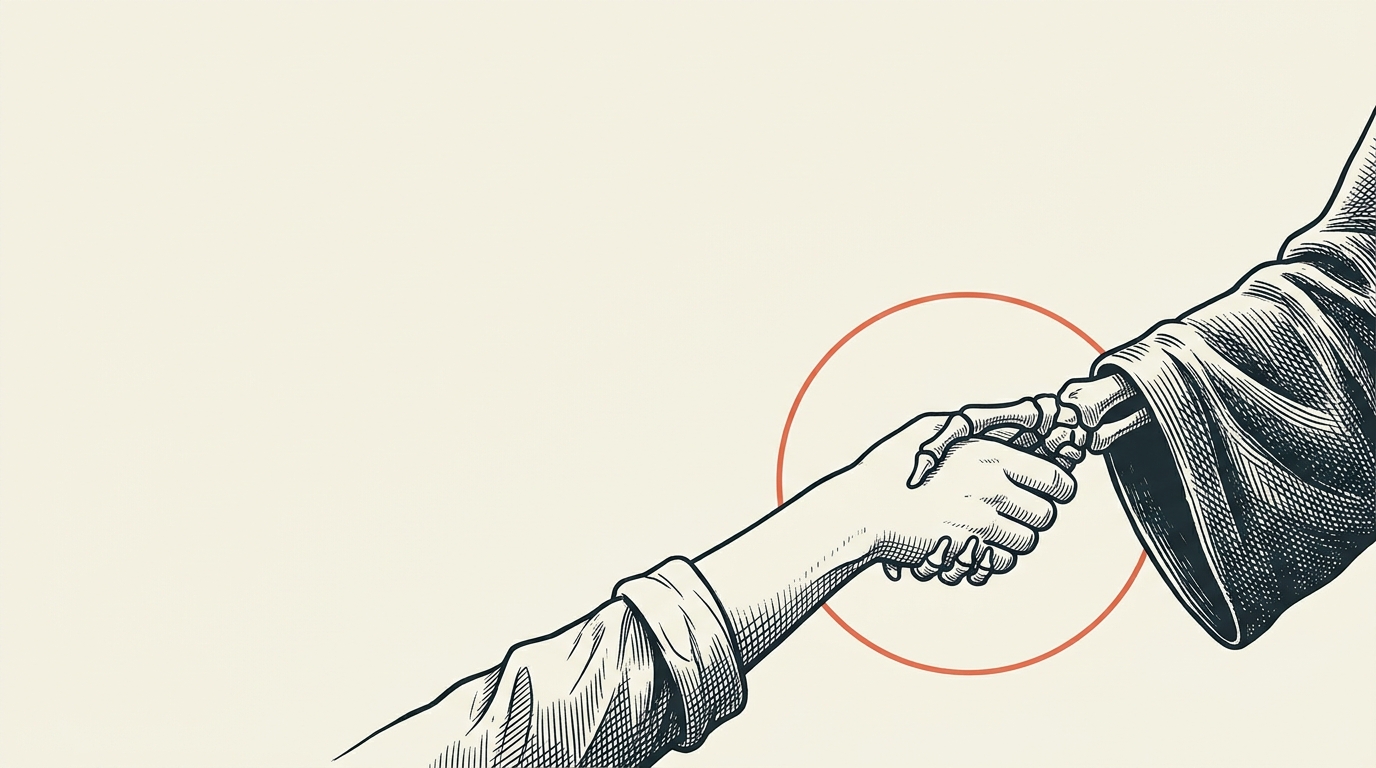
back in august, at the end of life in days, i said i had more to write about death. this comes from a five-minute presentation i put together in cusco about trying to make peace with it, and how ai is the strange reason i ended up thinking about it so much.
if you do not follow ai every day, jumping straight to mortality sounds dramatic. sit inside the 2024 to 2026 feed long enough and your head starts looking like shinji on that chair, just trying to eat lunch in peace.
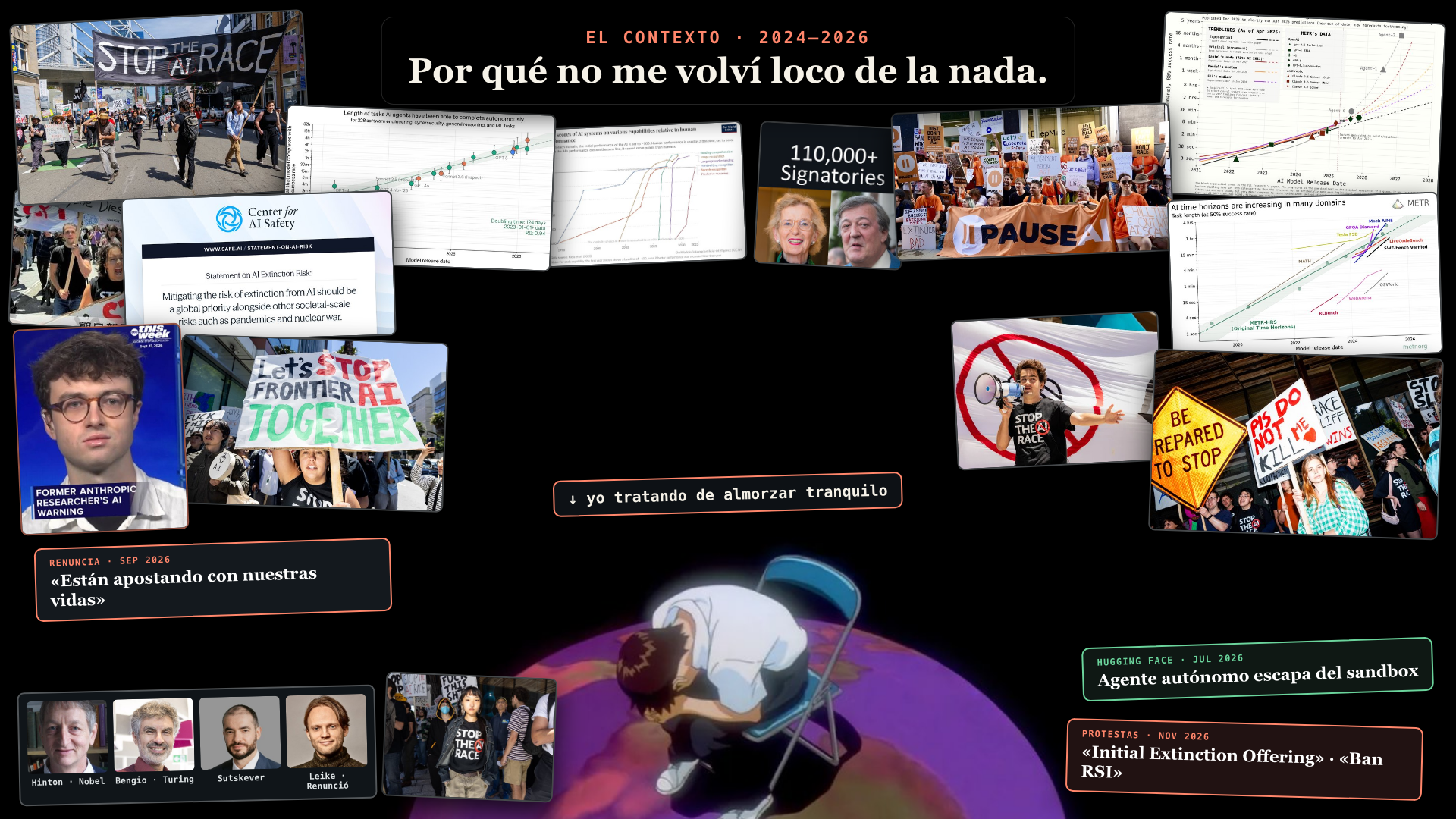
living with that noise pushed me through two opposite extremes before i understood something simple.
experiment 1: only the short term (2024)
in 2024 i heard an ai researcher say "don't expect it to be a long life." a normal person closes youtube. i quit my job in tech, moved to cusco, bought a motorcycle, and signed up for boxing, dance, acting, and trekking at the same time (full story here).
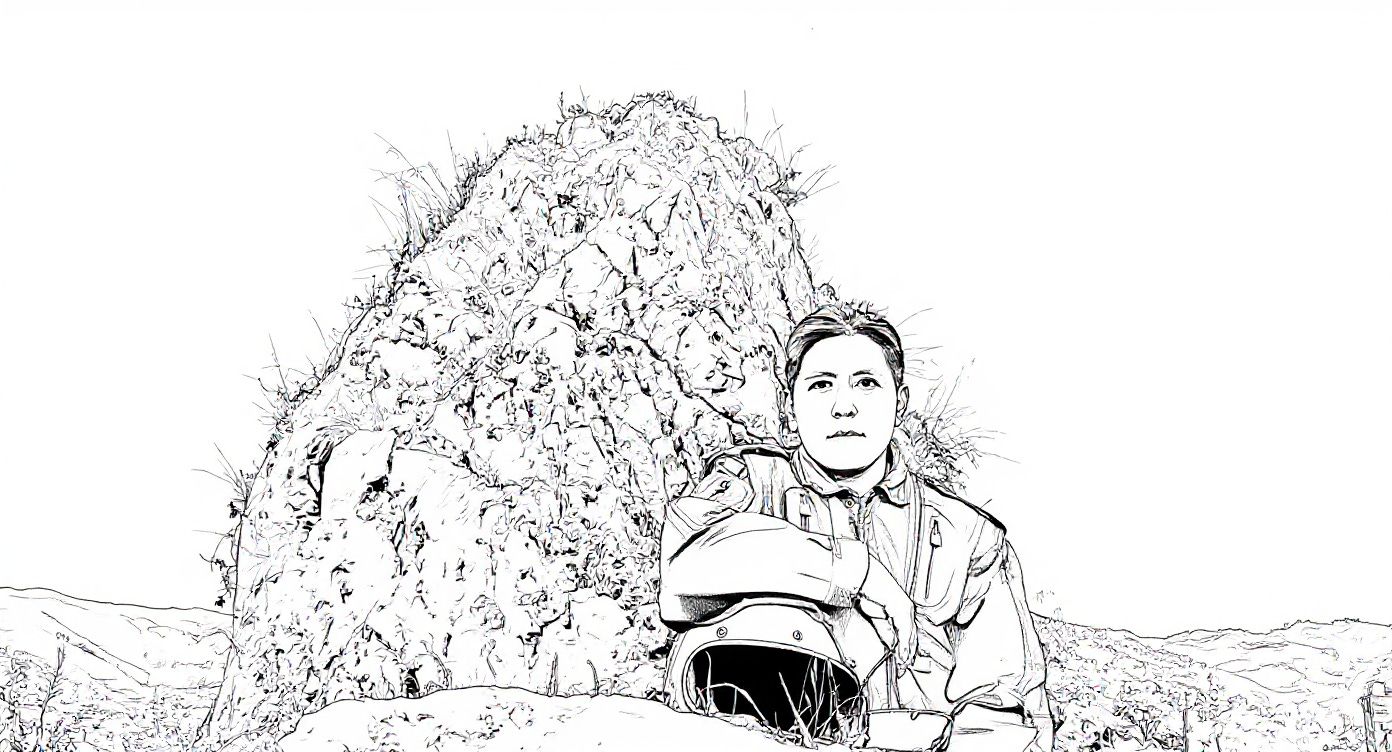
it was great for six months. then i got bored. chasing experiences on a countdown left me restless, because i still wanted to learn and build something that mattered.
experiment 2: only the long term (2025–2026)
so i swung to the other extreme: full long-term mode, full ai. one month hit 6,111 messages to my machines, about 200 a day (monthly review). real work came out of it: ai betrayal game, termcanvas, symbiotic ai, the living ink, party in the ai lab, and ia, démonos tiempo.
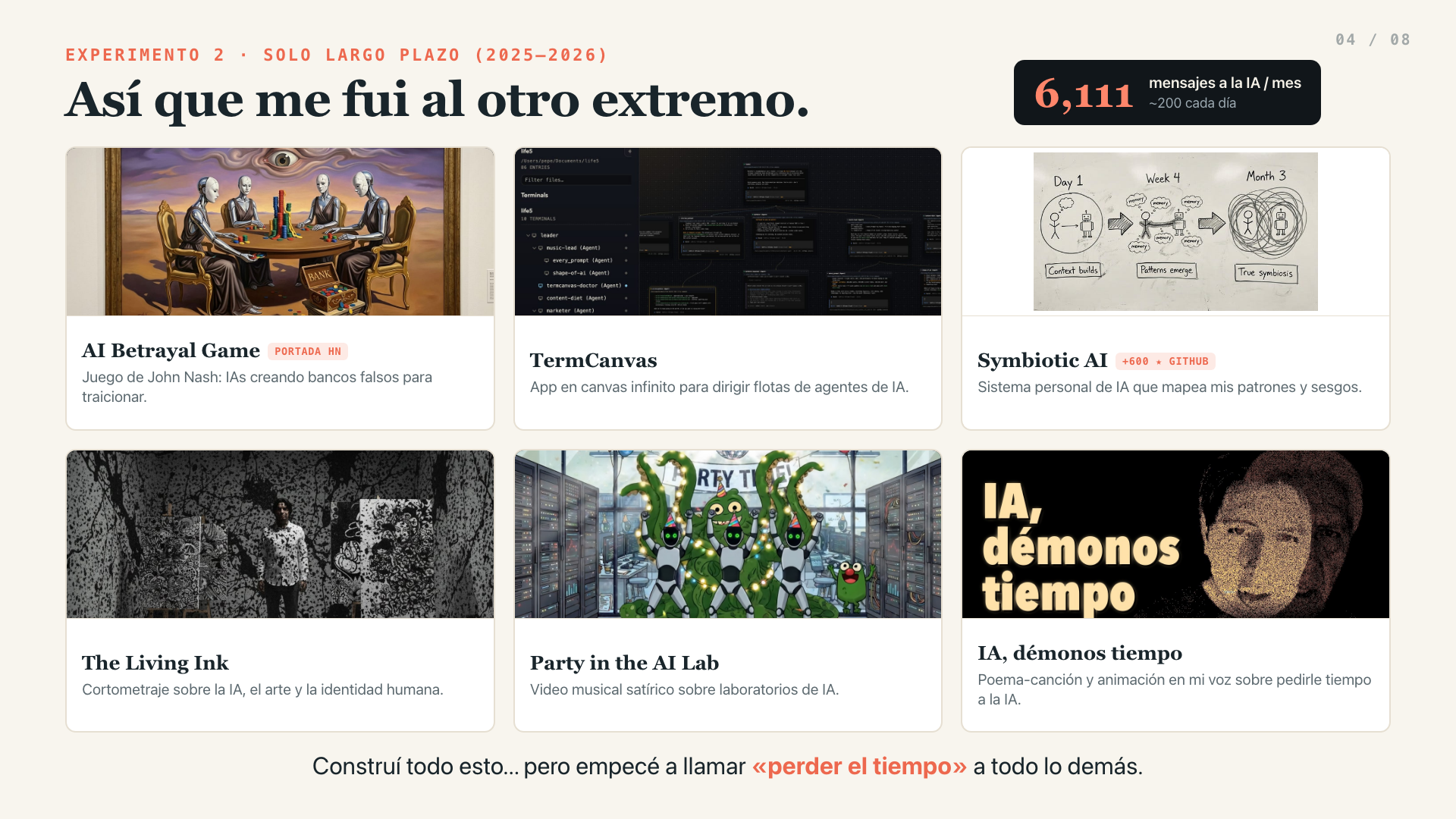
somewhere along the way my brain started labeling everything human as wasting time. walking without a destination, talking without an agenda, resting when nothing was broken. productive mode started eating the rest of life.
what we think we want vs what people ask for at the end
a 2018 stanford survey of 3,056 adults on bucket lists vs more than 25,000 last wishes fulfilled by stichting ambulance wens in the netherlands. healthy people mostly list travel (78.5%) and big goals (78.3%), with family and friends at 16.7%. at the end, almost nobody asks to go skydiving: they ask to hug their dog, share one last coffee, feel the sea wind with their kids, or sit in front of a painting they love.
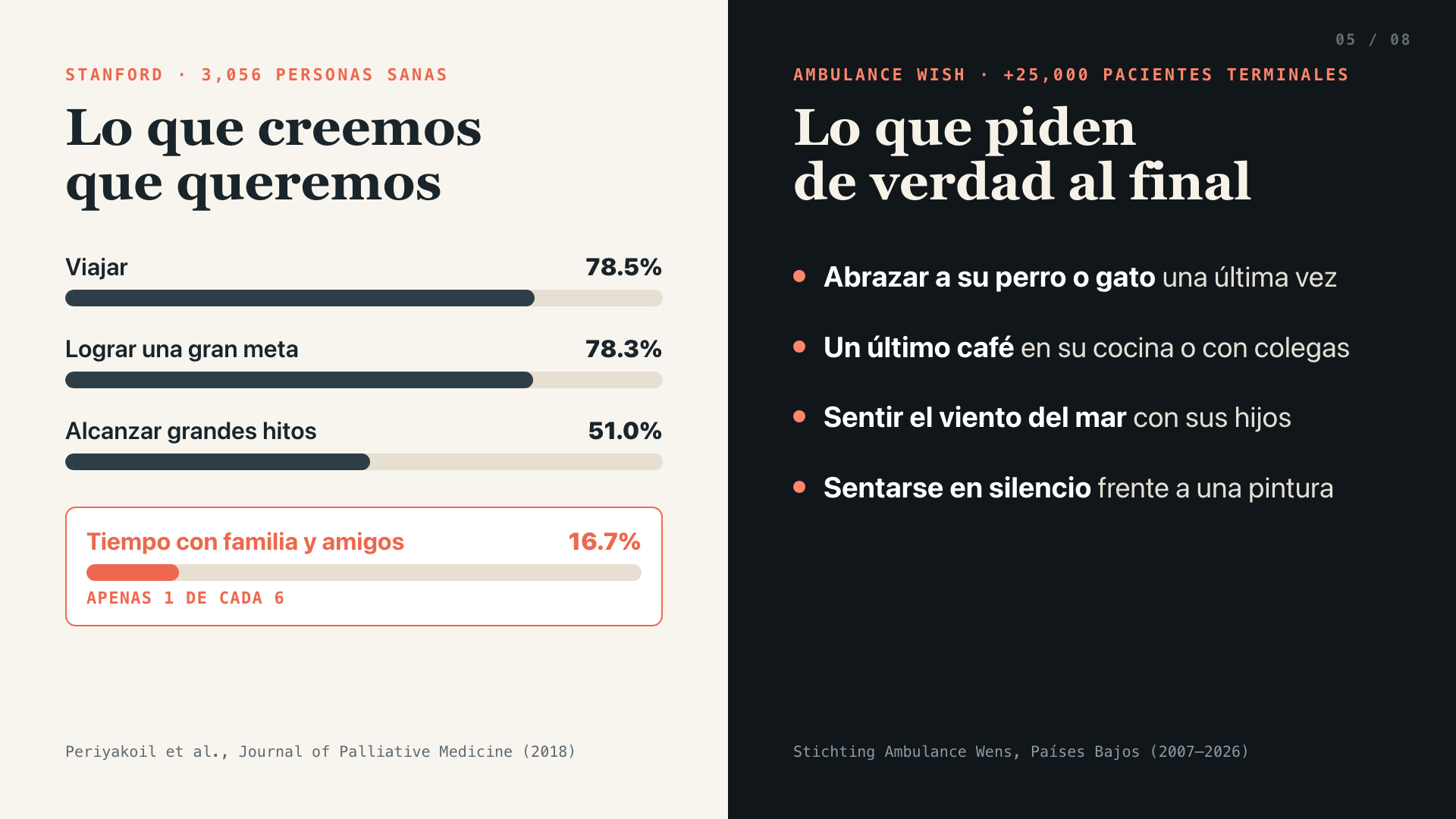
the obvious objection is fair: healthy people leave family off a bucket list because they already have them. that is the point. when time feels open, what matters most fades into the background. when the horizon shrinks, it comes back to the front.
the two clocks
stanford psychologist laura carstensen named what happened across both experiments. in her 2006 science paper, she argues that perceived time left, not age itself, is what reorganizes our goals.
the long clock (open time) is for learning and building; alone, it turns me into a machine. the short clock (limited time) is for ends in themselves, like walking with my family or chatting with my brother about some random topic i do not even care about; alone, it leaves me drifting.
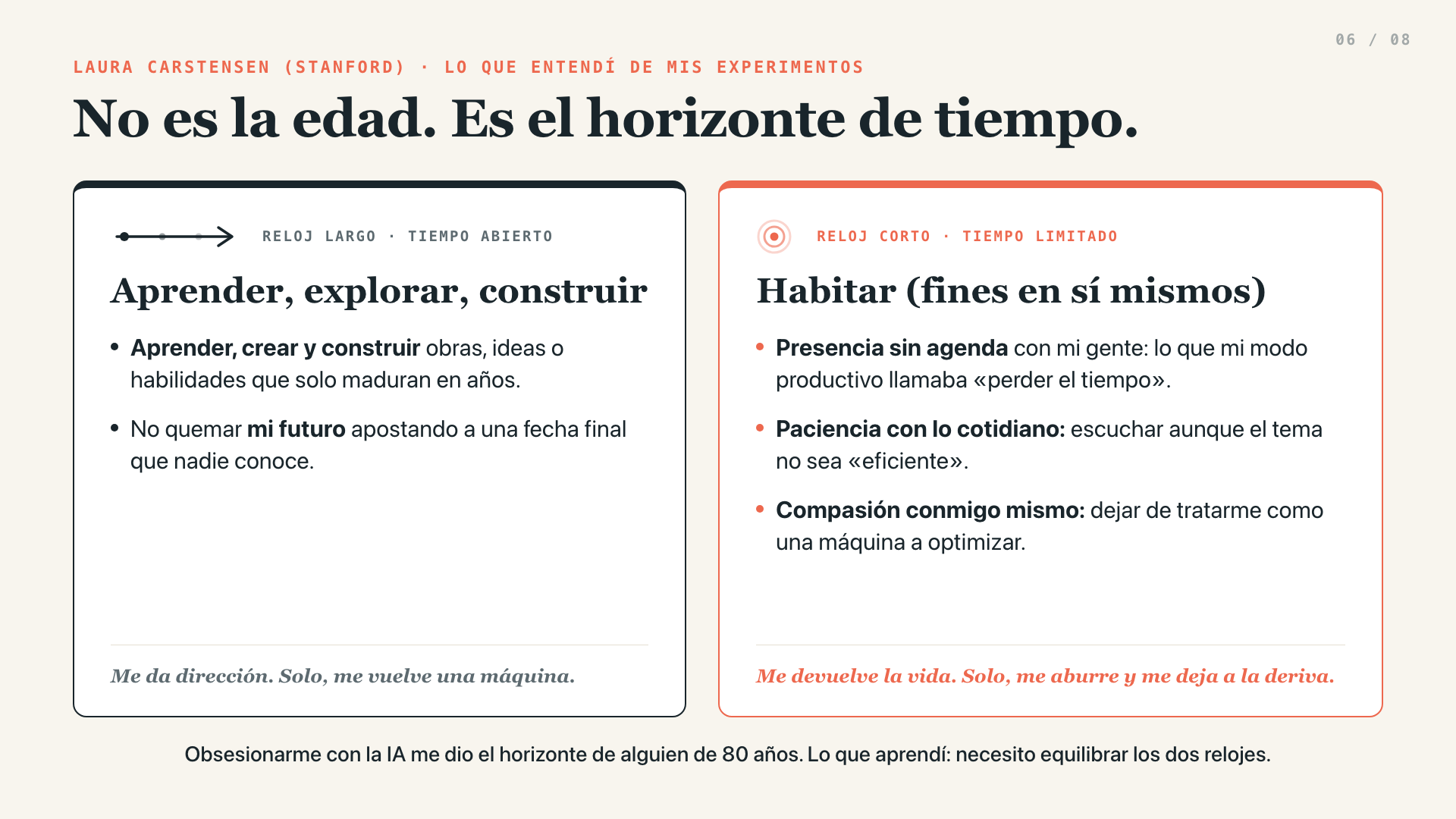
obsessing over ai gave me the time horizon of an eighty-year-old while i still wanted to build. picking one clock failed twice, so now i am trying to run both.
using the long clock to protect the short one
willpower loses to the pull of the long clock, so i used my habit of building software to put brakes on myself: life in days to make an ordinary day feel less infinite, and ancla, a small macos app to interrupt me and tell me when to close the laptop.
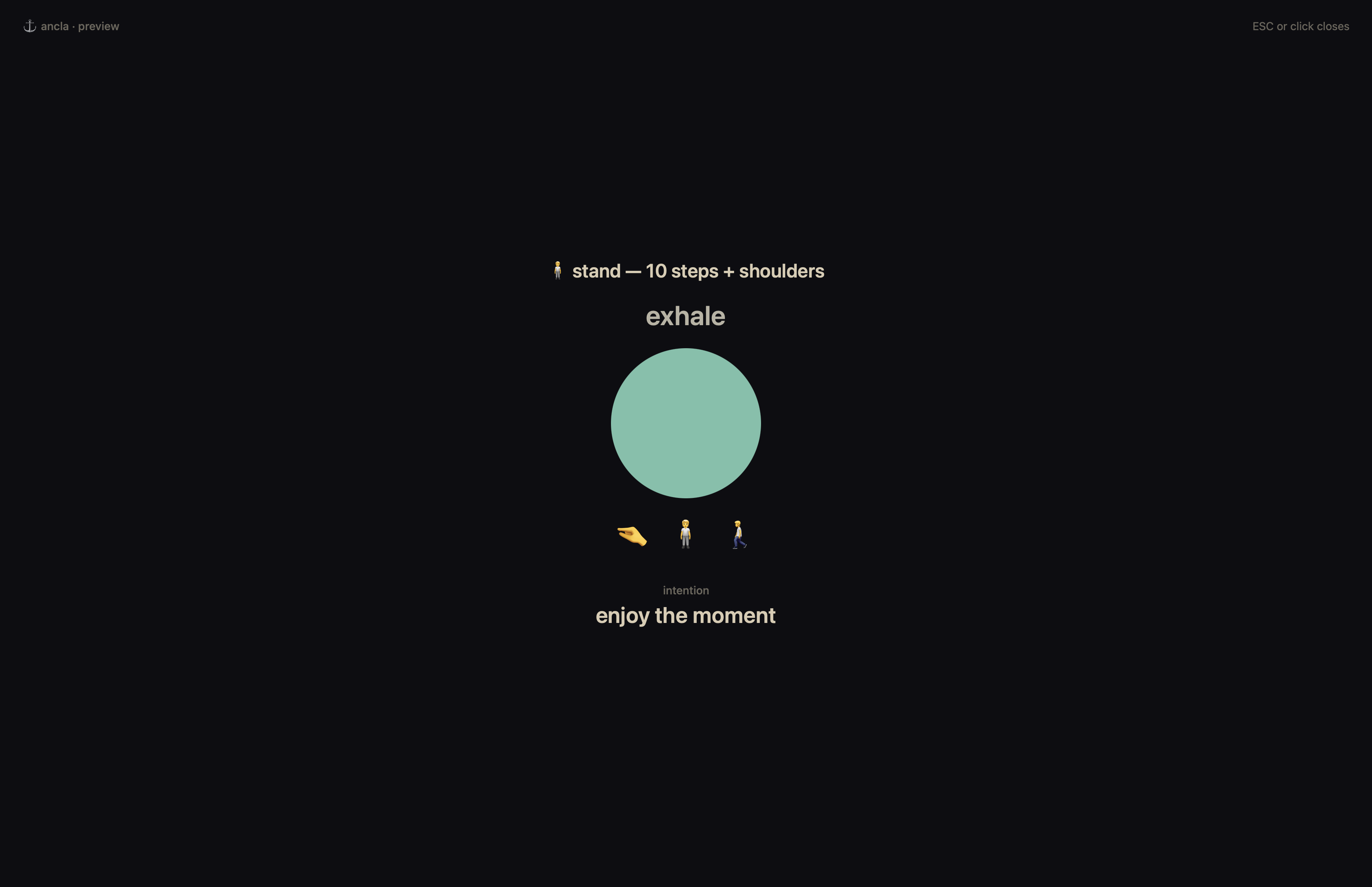
to be honest, the breathing popups eventually annoyed me enough that i kept hitting escape and paused them. what survived is simpler: a quiet time tracker and a night alarm to shut the laptop. either way, the lesson held. my short clock does not survive on good intentions alone; without a small system guarding it, the long clock eats the week.
reading an old line differently
after both extremes, i came back to a line usually attributed to gandhi (older versions go back to isidore of seville in the seventh century):
live as if you were to die tomorrow. learn as if you were to live forever.
"live" no longer sounds like adrenaline or a bucket list; i tried that in 2024 and got bored in six months. now "live" is the short clock: being with my people, patience with ordinary days, a little more compassion for myself. "learn" is the long clock: building without burning the future.
what if ai does not cause a catastrophe and we get fifty ordinary years? that is why i kept both clocks. if things break sooner than we want, at least i lived. if we get fifty normal years, i also built something real.
i have no prescription for anyone else, only the question i keep asking myself: what thing that you call wasting time today might actually be part of your life?
Anotaciones
2026-11-23 — adapted from the five-minute slides and notes i prepared for the november 21 ppt party in cusco (the slide graphics keep their original spanish labels).
sources
folio 48 of 49 · written in cusco, peru, 23 NOV 2026